Consultants to the Visitor Attraction Sector

Angus Council
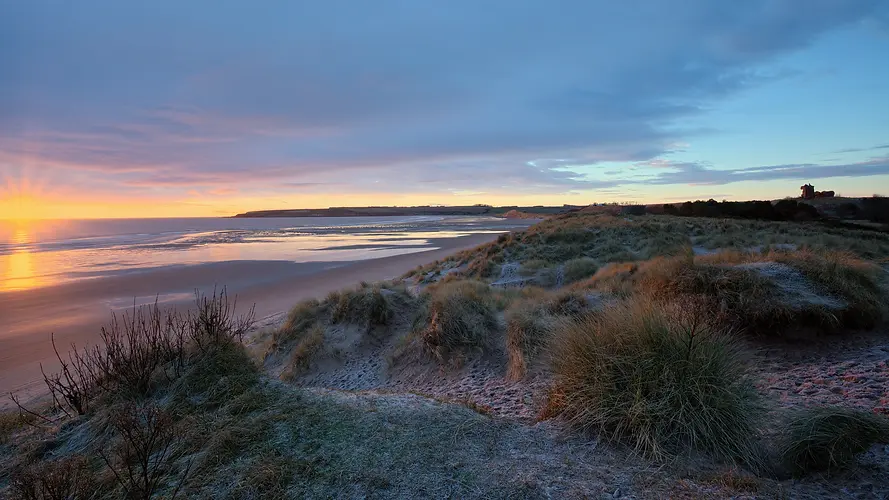
Angus is the coast and the glens of Tay Country, from the sea cliffs, beaches and harbour towns between Carnoustie and Montrose to the Angus Glens on the southern edge of the Cairngorms. Its visitor economy has grown steadily, reaching 1.3 million visits and £350 million of economic impact in 2025 and supporting more than 4,100 full-time equivalent jobs. With the 2019 to 2024 framework at the end of its life, Angus Council asked Xcentuate in 2026 to develop a new tourism framework for 2027 to 2032 that would position tourism as a core economic growth sector for the county.

Angus Council - Tourism strategy and framework development
Angus tourism in numbers:
£350m
economic impact in 2025, up 7.3% in a year
4,100+
full-time equivalent jobs supported
120
operators and partners engaged
Scope of work

Building the evidence base
We started with the numbers. Twelve years of STEAM data, the VisitScotland Scotland Visitor Survey, the Moffat Centre Visitor Attraction Barometer and the GB Tourism Survey were read together to establish the trajectory of the Angus visitor economy rather than a single-year snapshot. The analysis showed value growing faster than volume, with economic impact up around 46 per cent since 2019 against visitor growth of around 20 per cent. It showed day trips at 63 per cent of all visits but close to flat, staying visitors becoming the engine of growth, a strong and expanding non-serviced accommodation base, and visitor spend landing in transport, food and drink and shopping, which placed the vitality of the Angus burghs at the centre of the tourism case. We were open about the limits of the data, including sample sizes and the age of some sector datasets, and built that honesty into the framework’s approach to measurement.
Listening to the industry
Between May and June 2026 our engagement programme reached around 120 operators and partners. It combined a facilitated industry leadership session with the Angus Tourism Cooperative board and senior partners, bilateral conversations with public, regional and industry partners, and a structured business survey completed by 85 businesses across sub-sectors and sub-areas. Operators ranked marketing visibility and the strength of the destination story as the first priority, followed by place quality and town-centre vitality, product development and skills. They told us how they wanted to be engaged, through short, frequent written updates and proportionate thematic clusters, and that shaped the governance design as much as the priorities.
Strategic alignment
The framework had to sit cleanly inside a crowded strategy base. We mapped it against the National Strategy for Economic Transformation, Scotland Outlook 2030, the refreshed Tay Cities Regional Economic Strategy and Regional Tourism Framework, the Angus Council Plan, Local Development Plan, Rural Tourism Infrastructure Plan, Climate Action Plan and Brand Storytelling Framework, so that Angus reports upwards into the regional and national picture without duplicating structures or brands.
Drafting and consolidation
The framework was developed through successive drafts with Council officers, each round of comments integrated and checked against the evidence. The final consolidated version was completed in September 2026 as a standalone partnership document with a foreword, executive summary, evidence base, vision and positioning, five pillars, six strategic priorities, an early delivery plan, governance and monitoring arrangements, a risk register and annexes on engagement methodology and partner roles.


What the framework sets out
The framework sets a vision for 2032 of Angus as a high-quality, year-round destination of coast and glens, with a visitor economy that grows in value, supports good jobs and business growth and is shaped by the communities that live and work there. It is an economic growth framework. Rather than chasing visitor numbers, it leads on growing the value of day visits and increasing the number, length and value of staying visits across four priority audiences: Scotland and northern UK short-break visitors, international golf and outdoor visitors, day and short-stay visitors from the wider Tay region, and residents.
Delivery is organised around five pillars consistent with Scotland Outlook 2030: industry leadership, pride of place, product and experience, marketing, data and insights, and infrastructure and investment, with people and skills, digital capability and responsible tourism and net zero running across all five. Six strategic priorities translate the pillars into outcomes for 2032: sharpening the Angus brand and storytelling proposition, strengthening place-based vitality across the burghs, coast and glens, deepening the visitor experience and growing staying visits, rebalancing and growing the accommodation offer, building year-round and shoulder-season demand through events and product, and leading, coordinating and resourcing delivery.
Angus Council provides strategic leadership and works through its established partnership with the Angus Tourism Cooperative, with proportionate governance documented during the first year and an annual Action Plan setting out leads, timescales, measures and resources. Progress is measured through four lenses, economic value, visitor experience, brand and visibility, and community and place, with a mid-point refresh in 2029 and an end-point evaluation in 2032. The Council’s 2026/27 Delivery Plan commits to publishing the new framework by March 2027.
Source for the Council commitment: Angus Council Delivery Plan Operational Annex 2026-27, https://www.angus.gov.uk/sites/default/files/2026-04/Angus%20Council%20Delivery%20Plan%20Operational%20Annex%202026-27.pdf